Exercise 1
Vocabulary ボキャブラリー
(/ˈlætərəl ˌɛpɪˌkɒndɪˈlaɪtɪs/)
名詞
外側上顆炎(テニス肘)
Inflammation or microtearing of the tendons that join the forearm muscles to the outside of the elbow.
Example: Lateral epicondylitis is a common overuse injury in individuals who perform repetitive wrist extension.
外側上顆炎は、手首の伸展を繰り返す人に多く見られる過度使用による損傷です。
(/ɪkˈstɛnsər ˈkɑːrpaɪ ˌreɪdiˈælɪs ˈbrɛvɪs/)
名詞
短橈側手根伸筋
A muscle in the forearm that helps extend and abduct the wrist.
Example: The origin of the extensor carpi radialis brevis tendon is the primary site of degeneration in tennis elbow.
短橈側手根伸筋腱の起始部は、テニス肘における変性の主な部位です。
(/ˈtɛndərnəs/)
名詞
圧痛(触れた際の痛み)
Pain or soreness when a specific area is touched or pressured.
Example: Physical examination revealed maximal tenderness over the lateral epicondyle.
身体診察により、外側上顆に最大の圧痛が認められました。
(/pælˈpeɪʃən/)
名詞
触診
An act of examining a part of the body by touch, especially for medical diagnosis.
Example: The patient experienced discomfort during palpation of the common extensor tendon.
患者は総伸筋腱の触診中に不快感を覚えました。
(/ˈproʊneɪtɪd/)
形容詞
回内した(手のひらが下または後ろを向いた状態の)
Turned so that the palm faces downward or backward.
Example: Pain is reproduced when the wrist is extended while the forearm is pronated.
前腕を回内した状態で手首を伸展させると、痛みが再現されます。
Exercise 2
Medical Article
※AI音声
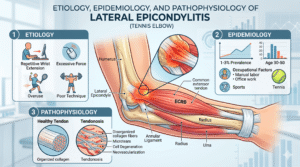
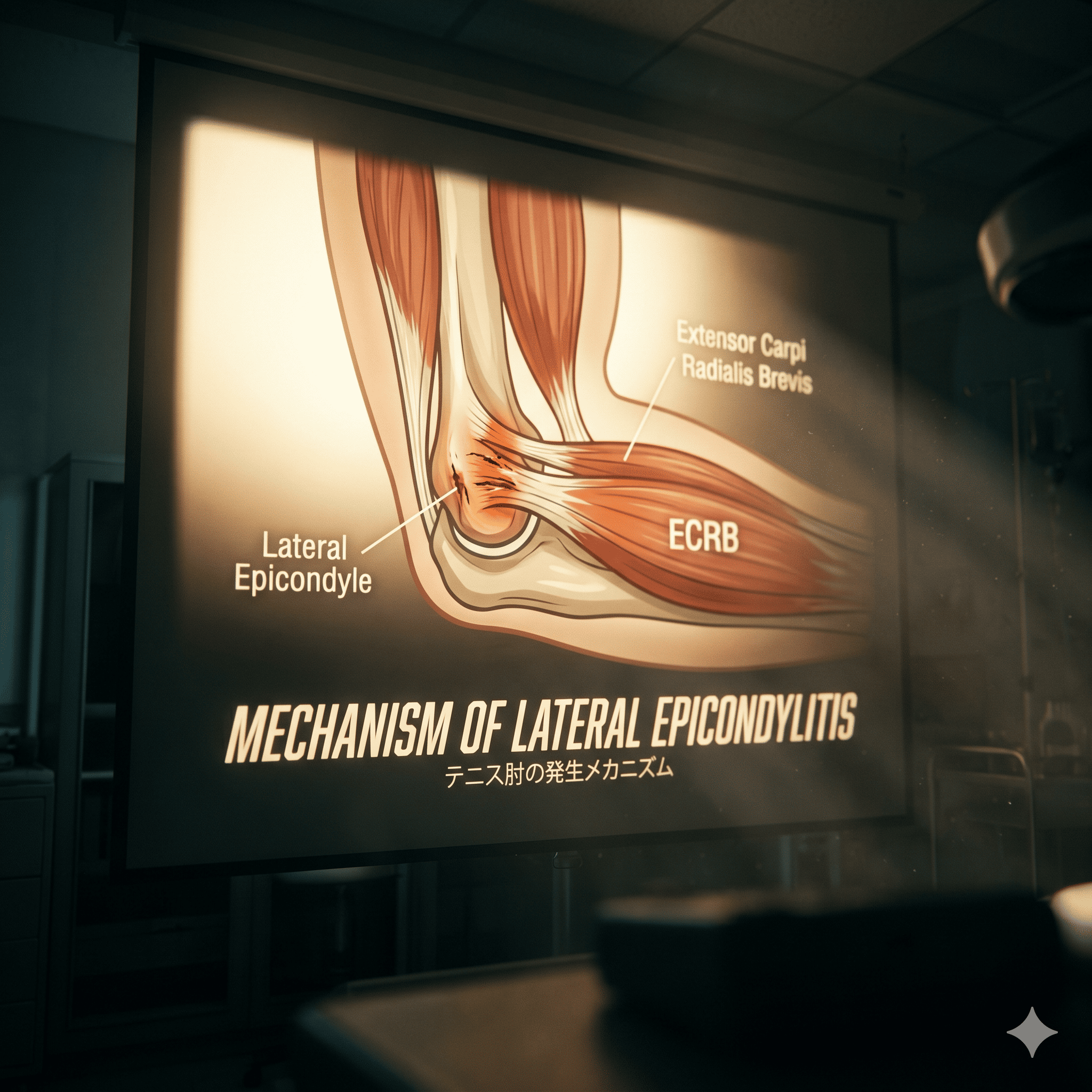
Lateral epicondylitis, also commonly referred to as tennis elbow, describes an overuse injury that occurs secondary to an eccentric overload of the common extensor tendon at the origin of the extensor carpi radialis brevis (ECRB) tendon.
Tennis elbow primarily results from the repetitive strain caused by activities that involve loaded and repeated gripping and/or wrist extension.
It is common in individuals who play tennis, squash, badminton, or any activity involving repetitive wrist extension, radial deviation, and/or forearm supination.
Patients will typically report pain with an insidious onset, but upon further questioning, they will often relate an overuse history without a specific inciting traumatic event.
The pain commonly occurs one to three days after an unaccustomed activity that involves repeated wrist extension.
The history may reveal new equipment use or an atypical workout circumstance, such as an abnormally intense or prolonged workout in an athlete.
This condition can also be precipitated by an acute injury or strain, such as lifting a heavy object or performing a hard backhand swing in tennis.
This acute injury can lead to a more chronic process (i.e., acute-on-chronic overuse injury).
The pain is usually over the lateral elbow that worsens with activity and improves with rest.
The pain can vary from being mild, for example, with aggravating activities like tennis or the repeated use of a hand tool, or it can be such severe pain that simple activities like picking up and holding a coffee cup or a coffee cup sign will act as a trigger for the pain.
On examination, the point of maximal tenderness is usually over the lateral epicondyle, occasionally in a focal, distal location about 1 cm to 2 cm from the lateral epicondyle itself.
The patient may experience some degree of discomfort during palpation of the entire tendon, and the connecting muscle may exhibit significant tightness.
The patient’s pain will increase or be reproduced with resisted wrist extension, especially when the elbow is extended and the forearm is pronated.
Resisted extension of the middle finger while the elbow is extended is particularly painful secondary to increased stress placed on the tendon, further supporting the diagnosis.
Notably, there should be an absence of radicular symptoms or numbness/tingling.
These symptoms suggest an alternative process, such as radial nerve entrapment, although these conditions can coexist.
外側上顆炎は、一般にテニス肘とも呼ばれ、短橈側手根伸筋(ECRB)腱の起始部における総伸筋腱への遠心性過負荷に起因して発生する過度使用(オーバーユース)損傷を指します。
テニス肘は、主に負荷がかかった状態での繰り返しの握り込みや手首の伸展(背屈)を伴う動作による反復的なストレスによって生じます。
テニス、スカッシュ、バドミントンを行う人や、手首の反復的な伸展、橈屈、および/または前腕の回外を伴うあらゆる活動を行う人に多く見られます。
患者は通常、潜行性(いつの間にか始まる)に発症する痛みを訴えますが、詳しく問診すると、特定の誘因となる外傷エピソードはなく、過度使用の病歴を話すことがよくあります。
痛みは一般に、手首の反復的な伸展を伴う慣れない活動を行った1〜3日後に発生します。
問診では、新しい道具の使用や、アスリートにおける異常に強度の高い、または長時間のトレーニングなど、変則的なワークアウトの状況が明らかになることがあります。
この疾患は、重い物を持ち上げたり、テニスで強いバックハンドスイングを行ったりするなどの、急性外傷やひずみによって引き起こされることもあります。
この急性外傷が、より慢性的プロセス(すなわち、慢性に加わった急性過度使用損傷)へとつながる可能性があります。
痛みは通常、肘の外側にあり、活動によって悪化し、安静によって改善します。
痛みは、テニスや手工具の度重なる使用などの悪化させる活動によって生じる軽度のものから、コーヒーカップを持ち上げて保持するような簡単な動作が痛みの引き金となる(コーヒーカップサイン)ほどの激しい痛みまで様々です。
診察では、最大の圧痛点は通常、外側上顆の上にありますが、外側上顆自体から約1cm〜2cm遠位の局所的な位置にあることもあります。
患者は腱全体の触診中に、ある程度の不快感を覚えることがあり、接続する筋肉に著しい緊張(タイトネス)が見られる場合があります。
患者の痛みは、特に肘を伸展させ、前腕を回内させた状態での抵抗下での手首伸展により増強または再現されます。
肘を伸展させた状態での中指の抵抗下伸展は、腱にかかるストレスが増加するため特に痛みを感じ、診断をさらに裏付けるものとなります。
特に、神経根症状やしびれ・チクチク感(麻痺感)がないことが条件となります。
これらの症状は、橈骨神経絞扼障害などの別の病態を示唆しますが、これらの疾患が併存することもあります。
Exercise 3
Discussion ディスカッション
Q: What is the primary anatomical site affected in lateral epicondylitis?
外側上顆炎で主に影響を受ける解剖学的部位はどこですか?
Q: According to the article, what common activities can lead to tennis elbow?
記事によると、テニス肘を引き起こす一般的な活動にはどのようなものがありますか?
Q: How do patients typically describe the onset and pattern of the pain?
患者は通常、痛みの始まりやパターンをどのように説明しますか?
Q: What physical examination test involving fingers can help support the diagnosis of tennis elbow?
テニス肘の診断を裏付けるのに役立つ、指を用いたどのような身体診察テストがありますか?
Q: What symptoms, if present, would suggest an alternative diagnosis like radial nerve entrapment rather than isolated tennis elbow?
単独のテニス肘ではなく、橈骨神経絞扼障害のような別の診断を示唆する症状には何がありますか?
Exercise 4
Further Discussion 一歩踏み込んだディスカッション
Q: In your clinical practice, what conservative treatment options (e.g., physical therapy, acupuncture, or bracing) have you found most effective for managing lateral epicondylitis?
あなたの臨床において、外側上顆炎の管理に最も効果的だと感じた保存的治療(理学療法、鍼灸、装具療法など)は何ですか?
Q: How would you educate a patient on modifying their daily activities or sports technique to prevent the recurrence of tennis elbow?
テニス肘の再発を防ぐために、日常生活動作やスポーツの技術をどのように修正するよう患者に指導しますか?
Q: When a patient presents with ‘the coffee cup sign’ (severe pain during simple tasks), how does this affect your immediate treatment plan compared to a milder case?
患者が「コーヒーカップサイン」(簡単な動作での激しい痛み)を呈している場合、軽症のケースと比較して、初期の治療計画にどのような影響を与えますか?
Q: The text mentions that conditions like radial nerve entrapment can coexist with lateral epicondylitis. How do you differentially diagnose or address coexisting neurological issues in elbow pain?
本文では橈骨神経絞扼障害などの病態が外側上顆炎と併存する可能性があると言及されています。肘の痛みにおいて、併存する神経学的問題をどのように鑑別診断、または対処しますか?
Q: What are some specific acupuncture points or manual therapy techniques targeting the extensor carpi radialis brevis (ECRB) that you prefer to use, and why?
短橈側手根伸筋(ECRB)を標的とする、あなたが好んで使用する特定の鍼灸の経穴(ツボ)や徒手療法の技術は何ですか?またその理由は何ですか?
Reference
Lateral Epicondylitis (Tennis Elbow)
Benjamin K. Buchanan; Matthew A. Varacallo.