Exercise 1
Vocabulary ボキャブラリー
(/ˈlætərəl ˌɛpɪˌkɒndɪˈlaɪtɪs/)
名詞
外側上顆炎
Inflammation or degeneration of the tendons that join the forearm muscles to the outside of the elbow.
Example: Lateral epicondylitis is commonly caused by repetitive wrist extension.
外側上顆炎は、一般的に反復的な手関節の伸展によって引き起こされる。
(/ˌiːtiˈɒlədʒi/)
名詞
病因、原因論
The cause, set of causes, or manner of causation of a disease or condition.
Example: Understanding the etiology of tennis elbow helps in designing effective physical therapy programs.
テニス肘の病因を理解することは、効果的な理学療法プログラムを計画するのに役立つ。
(/ˌpæθəʊˌfɪziˈɒlədʒi/)
名詞
病態生理、病態生理学
The disordered physiological processes associated with disease or injury.
Example: The pathophysiology of this condition involves degenerative changes rather than active inflammation.
この病態の病態生理には、活動性の炎症よりもむしろ退行性の変化が関与している。
(/ɪkˈstɛnsər ˈkɑːrpaɪ reɪdiˈælɪs ˈbrɛvɪs/)
名詞
短橈側手根伸筋
A muscle in the forearm that acts to extend and abduct the wrist.
Example: The extensor carpi radialis brevis is the primary muscle affected in lateral epicondylitis.
短橈側手根伸筋は、外側上顆炎において主に影響を受ける筋肉である。
(/ˌændʒioʊˌfaɪbrəˈblæstɪk dɪsˈpleɪʒə/)
名詞
血管線維芽細胞性異形成
A tissue breakdown characterized by fibroblast proliferation and vascular hyperplasia, typical of chronic tendinosis.
Example: Histological studies confirmed the presence of angiofibroblastic dysplasia in the chronic tendon tissue.
組織学的研究により、慢性の腱組織における血管線維芽細胞性異形成の存在が確認された。
Exercise 2
Medical Article
※AI音声
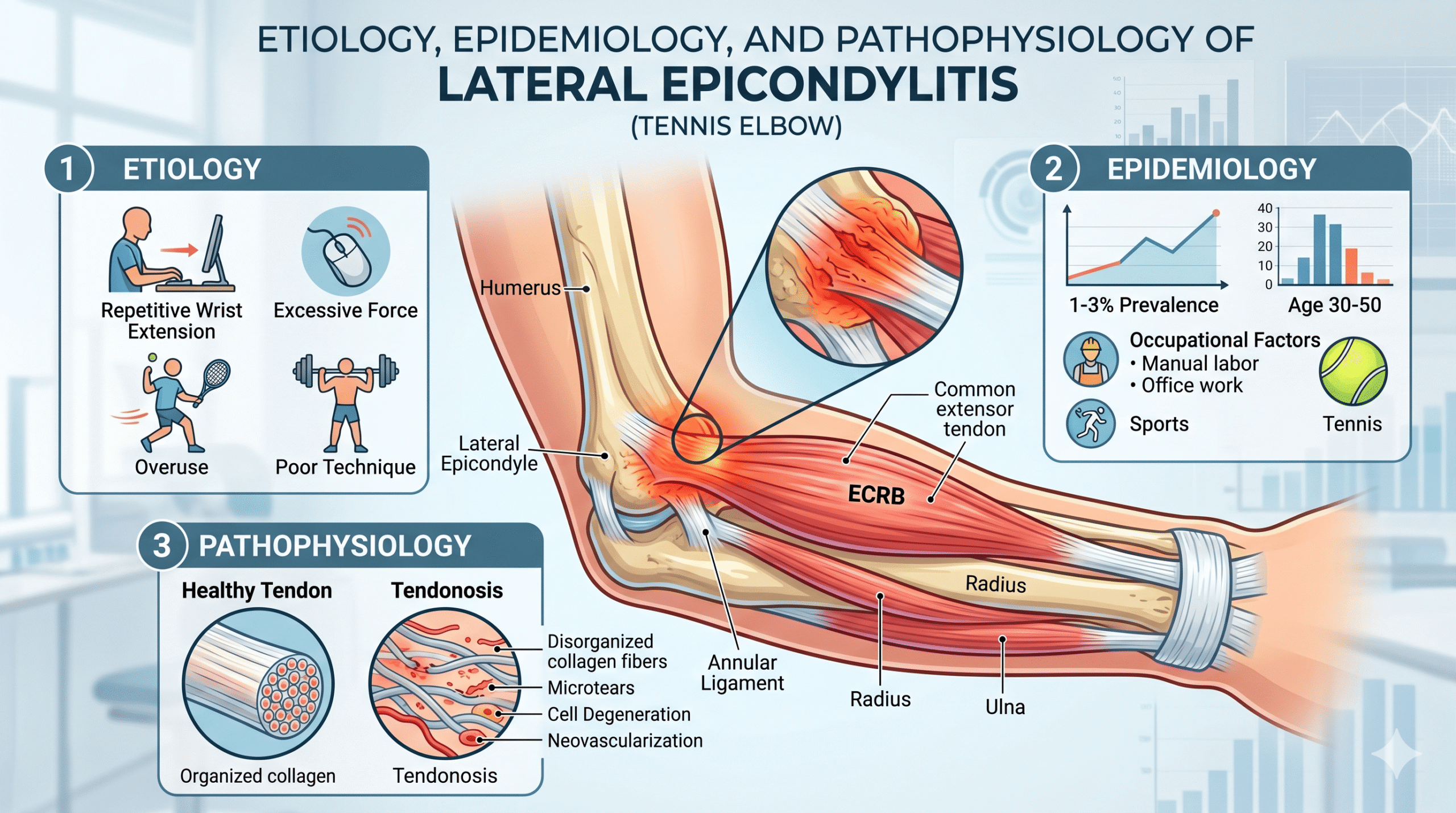
Etiology: Lateral epicondylitis, commonly known as tennis elbow, is an overuse injury primarily caused by repetitive strain from activities that involve repetitive, loaded gripping and/or wrist extension.
It classically occurs in tennis players but can result from any sport that requires repetitive wrist extension, radial deviation, and/or forearm supination.
It is also seen in athletes who play squash and badminton, and other sports or activities that require similar movements.
This condition is often precipitated by poor mechanics and technique or improper equipment in the athletic patient population.
Epidemiology: Lateral epicondylitis is the most common cause of elbow symptoms in patients presenting with elbow pain in general.
The condition tends to affect men and women equally.
The annual incidence is one to three percent in the United States.
Despite the condition being commonly referred to as tennis elbow, tennis players make up only 10% of the patient population.
Half of all tennis players develop pain around the elbow, of which 75% represent true tennis elbow.
It is more common in individuals older than 40 years of age.
Smoking, obesity, repetitive movement for at least two hours daily, and vigorous activity (managing physical loads over 20 kg) are risk factors in the general population for developing this condition.
The natural course of the condition is favorable, with spontaneous recovery within one to two years in 80% to 90% percent of the patients.
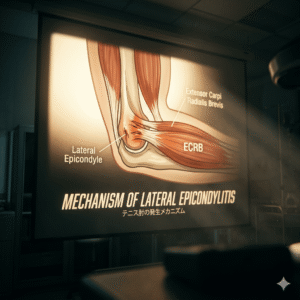
Pathophysiology: This condition is primarily a degenerative overuse process of the extensor carpi radialis brevis and the common extensor tendon.
Aside from degenerative changes, the histological findings include granulation tissue, micro-rupture, an abundance of fibroblasts, vascular hyperplasia, unstructured collagen, and a notable lack of traditional inflammatory cells (macrophages, lymphocytes, neutrophils) within the tissue.
The term has been previously described as angiofibroblastic dysplasia based on multiple histologic studies describing its microscopic appearance and characteristics.
Ultrasound evaluation often reveals calcifications, intra-substance tears, marked irregularity of the lateral epicondyle, and thickening and heterogeneity of the common extensor tendon.
病因:一般にテニス肘として知られる外側上顆炎は、主に、反復的かつ負荷のかかる把持(グリップ)や手関節背屈(伸展)を伴う動作による反復性の緊張(過用)によって引き起こされる障害である。
典型的にはテニス選手に発生するが、反復的な手関節背屈、橈屈、および/または前腕回外を必要とするあらゆるスポーツに起因する可能性がある。
スカッシュやバドミントンを行うアスリート、または同様の動作を必要とするその他のスポーツや活動でも見られる。
この病態は、アスリートの患者層において、不良なバイオメカニクスや技術、あるいは不適切な用具によって引き起こされることが多い。
疫学:外側上顆炎は、一般に肘の痛みを訴えて受診する患者における、肘の症状の最も一般的な原因である。
この病態は男女均等に影響を及ぼす傾向がある。
米国における年間罹患率は1〜3%である。
この病態は一般にテニス肘と呼ばれているが、テニス選手は患者層のわずか10%を占めるにすぎない。
全テニス選手の半数が肘周囲の痛みを経験し、そのうちの75%が本物のテニス肘である。
40歳以上の個人に多く見られる。
一般人口において、喫煙、肥満、毎日少なくとも2時間の反復運動、および激しい活動(20kgを超える物理的負荷の管理)が、この病態を発症するリスク因子である。
この病態の自然経過は良好であり、患者の80%から90%が1〜2年以内に自然回復する。
病態生理:この病態は、主に短橈側手根伸筋および総指伸筋腱(総伸筋腱)の退行性(変性性)の過用プロセスである。
退行性変化に加えて、組織学的所見には、肉芽組織、微小断裂、豊富な線維芽細胞、血管増殖(過形成)、構造化されていないコラーゲン、および組織内の伝統的な炎症細胞(マクロファージ、リンパ球、好中球)の顕著な欠如が含まれる。
この用語は、その顕微鏡的外観と特徴を説明する複数の組織学的研究に基づいて、以前は血管線維芽細胞性異形成(angiofibroblastic dysplasia)と表現されていた。
超音波評価では、石灰化、実質内断裂、外側上顆の顕著な不整、および総伸筋腱の肥厚と不均一性がしばしば認められる。
Exercise 3
Discussion ディスカッション
Q: What are the primary movements that cause the repetitive strain leading to lateral epicondylitis?
外側上顆炎につながる反復的な緊張を引き起こす主な動作は何ですか?
Q: What percentage of the patient population with lateral epicondylitis is actually made up of tennis players?
外側上顆炎の患者層のうち、実際にテニス選手が占める割合は何パーセントですか?
Q: What are the risk factors for developing lateral epicondylitis in the general population?
一般人口において外側上顆炎を発症するリスク因子は何ですか?
Q: Which muscle and tendon are primarily involved in the degenerative overuse process of this condition?
この病態の退行性過用プロセスにおいて、主にどの筋肉と腱が関与していますか?
Q: What specific features does ultrasound evaluation often reveal in patients with lateral epicondylitis?
超音波評価は、外側上顆炎の患者においてどのような具体的な特徴をしばしば明らかにしますか?
Exercise 4
Further Discussion 一歩踏み込んだディスカッション
Q: In your clinical experience, what are the most common non-athletic occupations or daily activities that precipitate lateral epicondylitis?
あなたの臨床経験において、外側上顆炎を引き起こす最も一般的な非スポーツ系の職業や日常活動は何ですか?
Q: Given that the natural course shows spontaneous recovery in 80% to 90% of patients, how do you determine when active physical therapy or intervention is necessary?
自然経過において80%から90%の患者が自然回復することを踏まえ、積極的な理学療法や介入が必要となるタイミングをどのように判断しますか?
Q: The article mentions a notable lack of traditional inflammatory cells. How does this histological characteristic affect your choice of treatment modalities (e.g., NSAIDs vs. eccentric exercises)?
記事では伝統的な炎症細胞の顕著な欠如が言及されています。この組織学的特徴は、あなたの治療手段の選択(例:NSAIDsの使用 vs. エキセントリック運動)にどのように影響しますか?
Q: How would you educate a patient with poor sports mechanics or improper equipment to prevent the recurrence of tennis elbow?
テニス肘の再発を防ぐために、スポーツのバイオメカニクス(動作の仕組み)が不良であったり不適切な用具を使用している患者に対して、どのような指導を行いますか?
Q: Ultrasound can reveal findings like micro-ruptures or calcifications. How do you utilize imaging results to modify your physical therapy or acupuncture approach for a patient?
超音波検査は微小断裂や石灰化などの所見を明らかにすることがあります。患者に対する理学療法や鍼灸治療のアプローチを変更するために、これらの画像診断結果をどのように活用しますか?
Reference
Lateral Epicondylitis (Tennis Elbow)
Benjamin K. Buchanan; Matthew A. Varacallo.