Exercise 1
Vocabulary ボキャブラリー
(/ɪnˈtræpmənt njʊˈrɒpəθi/)
名詞
絞扼性神経障害
A disease or damage to a nerve caused by physical compression in a narrow anatomical space.
Example: Carpal tunnel syndrome is recognized as the most common entrapment neuropathy of the upper extremity.
手根管症候群は、上肢で最も一般的な絞扼性神経障害として認められている。
(/ˌpærəsˈθiːziə/)
名詞
異常感覚(しびれ、ピリピリ感など)
An abnormal sensation, such as burning, pricking, or tingling, typically caused by nerve damage.
Example: Patients with median nerve compression often complain of nocturnal paresthesia in their fingers.
正中神経麻痺の患者は、しばしば夜間に指の異常感覚を訴える。
(/ˈmiːdiən nɜːv/)
名詞
正中神経
A major nerve of the upper limb that passes through the carpal tunnel and supplies muscles and sensation to the hand.
Example: The surgical procedure aims to relieve pressure on the median nerve to restore hand function.
その手術の手技は、手の機能を回復させるために正中神経への圧力を軽減することを目的としている。
(/diːˌmaɪəlaɪˈneɪʃən/)
名詞
脱髄
The loss or damage of the protective myelin sheath surrounding nerve fibers.
Example: Prolonged mechanical compression induces median nerve demyelination at the site of entrapment.
長期にわたる機械的圧迫は、絞扼部位における正中神経の脱髄を誘発する。
(/ɪˈskiːmiə/)
名詞
虚血
An inadequate blood supply to an organ or a part of the body, especially the heart muscles or nerves.
Example: Persistent nerve tissue ischemia can lead to irreversible endoneurial damage if left untreated.
治療せずに放置すると、持続的な神経組織の虚血は不可逆的な内神経膜障害を引き起こす可能性がある。
Exercise 2
Medical Article
※AI音声
Epidemiology:
CTS is the most common entrapment neuropathy, causing numbness, paresthesia, and weakness in the affected hand.
At least 3.8% of individuals complaining of hand pain, numbness, or tingling have CTS.
Diagnosis is established via clinical assessment and electrophysiological testing, with most cases being idiopathic.
The annual incidence is 276 per 100,000 individuals, and the prevalence is 9.2% in women and 6% in men.
While affecting all demographics, CTS is most prevalent among adults aged 40–60. Geographical variations exist, with prevalence ranging from 7% to 16% in the UK compared to 5% in the US.
This high prevalence aligns with the surge in work-related musculoskeletal disorders (WMSDs) across Western nations, caused by repetitive movements and mechanical strain.
In 1998, Europe attributed over 60% of work-related upper limb musculoskeletal disorders to CTS.
Occupational variations are also stark; for instance, the fish processing industry reports a worker prevalence of up to 73%.
These statistics underscore the substantial socioeconomic and clinical burden of CTS, highlighting the necessity for effective management strategies.
Pathophysiology:
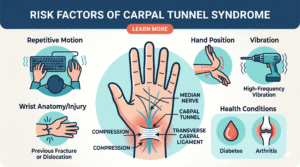
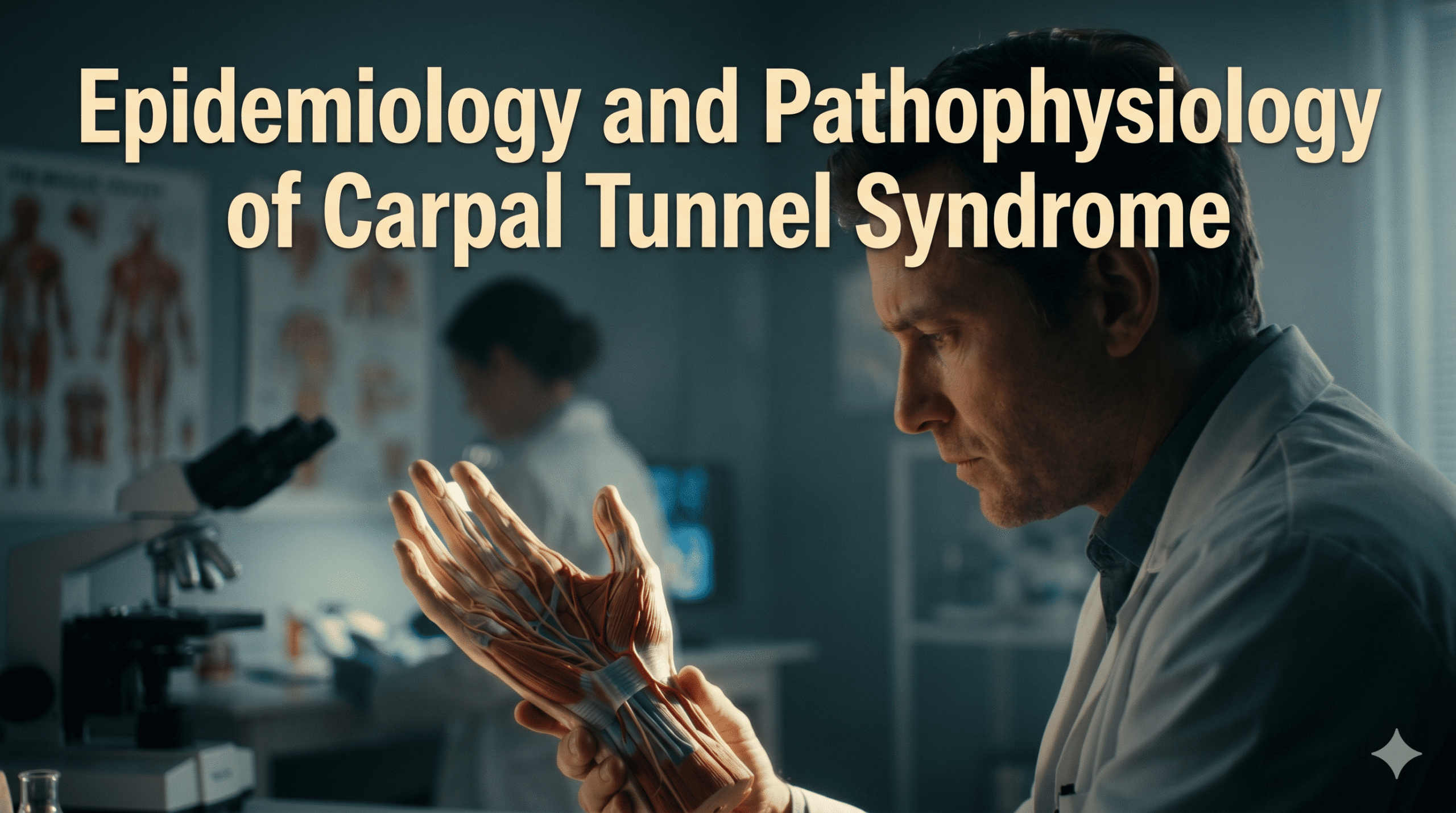
The pathophysiology of CTS involves a combination of mechanical trauma, increased pressure, and ischemic damage to the median nerve within the carpal tunnel.
Normal carpal tunnel pressure ranges between 2 and 10 mmHg.
However, wrist positioning dramatically alters this pressure: extension increases it over tenfold, while flexion causes an eightfold increase [18].
Consequently, repetitive wrist motions are a significant risk factor for CTS. Mechanically, frequent exposure to physical forces induces median nerve demyelination.
This demyelination begins at the compression site and extends to internodal segments, leaving axons intact.
Prolonged compression interrupts endoneurial capillary blood flow, disrupting the blood-nerve barrier and causing endoneurial edema.
This triggers a vicious cycle of venous congestion, ischemia, and local metabolic alterations.
The significance of ischemic injury is demonstrated by the rapid symptom resolution following carpal tunnel release surgery.
Additionally, limb ischemia exacerbates paresthesias, progressing through three phases: increased intrafunicular pressure, capillary leakage with edema, and arterial flow obstruction.
【疫学】
手根管症候群(CTS)は最も頻度の高い絞扼性神経障害であり、罹患した手にしびれ、異常感覚、および筋力低下を引き起こす。
手の痛み、しびれ、またはピリピリ感を訴える個人の少なくとも3.8%がCTSを有している。
診断は臨床評価と電気生理学的検査によって確定され、ほとんどの症例は特発性(原因不明)である。
年間罹患率は人口10万人あたり276人であり、有病率は女性で9.2%、男性で6%である。
すべての人口統計学的層に影響を与えるが、CTSは40〜60歳の成人の間で最も多く見られる。
地理的な格差も存在し、有病率は米国の5%に対して、英国では7%から16%の範囲に及ぶ。
この高い有病率は、反復運動や機械的負荷によって引き起こされる、欧米諸国における作業関連筋骨格系障害(WMSDs)の急増と一致している。
1998年、欧州では作業関連の上肢筋骨格系障害の60%以上がCTSに起因するとされた。
職種による格差も著しく、例えば魚類加工業では作業員の有病率が最大73%に達すると報告されている。
これらの統計は、CTSがもたらす重大な社会経済的および臨床的負担を強調しており、効果的な管理戦略の必要性を浮き彫りにしている。
【病態生理】
CTSの病態生理には、手根管内における正中神経への機械的外傷、圧力の上昇、および虚血性障害の組み合わせが関与している。
正常な手根管内圧は2〜10 mmHgの範囲である。
しかし、手首の肢位によってこの圧力は劇的に変化する。
背屈(伸展)によって10倍以上に上昇し、掌屈(屈曲)によって8倍の上昇を引き起こす。
その結果、反復的な手首の運動がCTSの重要なリスク因子となる。
力学的には、物理的な力に頻繁にさらされることで、正中神経の脱髄が誘発される。
この脱髄は圧迫部位から始まり、軸索を温存したまま節間部にまで及ぶ。
長期にわたる圧迫は内神経膜毛細血管の血流を遮断し、血液・神経関門を破壊して内神経膜浮腫を引き起こす。
これにより、静脈充血、虚血、および局所の代謝変化という悪循環が引き起こされる。
虚血性障害の重要性は、手根管開放術の後に症状が急速に消失することによって証明されている。
さらに、四肢の虚血は異常感覚を悪化させ、束内圧の上昇、浮腫を伴う毛細血管漏出、そして動脈血流の閉塞という3つの段階を経て進行する。
Exercise 3
Discussion ディスカッション
Q: What are the common symptoms of carpal tunnel syndrome mentioned in the article?
記事の中で述べられている手根管症候群の一般的な症状は何ですか?
Q: Which age group and gender shows the highest prevalence of CTS?
どの年齢層と性別が、CTSの最も高い有病率を示していますか?
Q: What causes the high prevalence of work-related musculoskeletal disorders (WMSDs) in Western nations?
欧米諸国における作業関連筋骨格系障害(WMSDs)の高い有病率は何によって引き起こされていますか?
Q: How do wrist extension and flexion affect the pressure inside the carpal tunnel?
手首の背屈(伸展)と掌屈(屈曲)は、手根管内部の圧力にどのように影響しますか?
Q: What happens to the axons during the process of median nerve demyelination caused by physical forces?
物理的な力によって引き起こされる正中神経の脱髄プロセスにおいて、軸索はどうなりますか?
Exercise 4
Further Discussion 一歩踏み込んだディスカッション
Q: As a healthcare professional, what conservative therapies or physical treatments would you recommend to a patient with mild CTS?
医療従事者として、軽度のCTS患者に対してどのような保存療法や物理療法を勧めますか?
Q: Why do you think occupational variations in CTS prevalence are so stark, particularly in industries like fish processing?
なぜCTSの有病率にこれほど劇的な職種間格差が存在するのだと思いますか?特に魚類加工業のような産業で高い理由は何でしょうか?
Q: How can physical therapists or occupational therapists help prevent work-related musculoskeletal disorders (WMSDs) in modern computer-based office environments?
現代のコンピューター中心のオフィス環境において、理学療法士や作業療法士は作業関連筋骨格系障害(WMSDs)の予防にどのように貢献できるでしょうか?
Q: Given that wrist positioning significantly changes carpal tunnel pressure, what ergonomic advice would you give to patients regarding their daily activities or sleep postures?
手首の肢位が手根管内圧を著しく変化させることを踏まえ、患者の日常活動や睡眠姿勢に関して、どのような人間工学的なアドバイスを行いますか?
Q: When a patient shows symptoms of both hand numbness and neck pain, how do you differentiate between carpal tunnel syndrome and cervical radiculopathy?
患者が手のしびれと首の痛みの両方の症状を示している場合、手根管症候群と頸椎神経根症をどのように鑑別しますか?
Reference
Carpal Tunnel Syndrome: A Review of Literature
Alessia Genova, Olivia Dix, Asem Saefan, Mala Thakur, Abbas Hassan
URL:https://pmc.ncbi.nlm.nih.gov/articles/PMC7164699/