Exercise 1
Vocabulary ボキャブラリー
(/ˌnjʊəroʊˌmɒdjʊˈleɪʃən/)
名詞
神経調節
The alteration of nerve activity through targeted delivery of a stimulus.
Example: Acupuncture acts as a form of bottom-up neuromodulation to balance brain circuits.
鍼治療は、脳回路のバランスを整えるためのボトムアップ型神経調節の一種として機能する。
(/ˈlɪmbɪk ˈsɪstəm/)
名詞(句)
大脳辺縁系
A complex system of nerves and networks in the brain concerned with instinct and mood.
Example: Hyperactivity in the limbic system is often observed in patients with depression.
大脳辺縁系の過活動は、うつ病患者によく見られる。
(/əˈmɪɡdələ/)
名詞
扁桃体
An almond-shaped structure in the brain involved with experiencing emotions.
Example: Acupuncture helps decrease cerebral blood flow in the amygdala to reduce anxiety.
鍼治療は扁桃体の脳血流を減少させ、不安を軽減するのに役立つ。
(/ˌpriːˈfrʌntl ˈkɔːrtɛks/)
名詞(句)
前頭前野
The cerebral cortex which covers the front part of the frontal lobe, responsible for cognitive behavior.
Example: The prefrontal cortex is crucial for emotional regulation and cognitive control.
前頭前野は感情調節と認知制御に不可欠である。
(/pərˈfjuːʒən/)
名詞
灌流(血流)
The passage of fluid through the circulatory system or lymphatic system to an organ or a tissue.
Example: Acupuncture helps normalize neural perfusion patterns in MDD patients.
鍼治療はMDD患者の神経灌流パターンの正常化を助ける。
Exercise 2
Medical Article
※AI音声
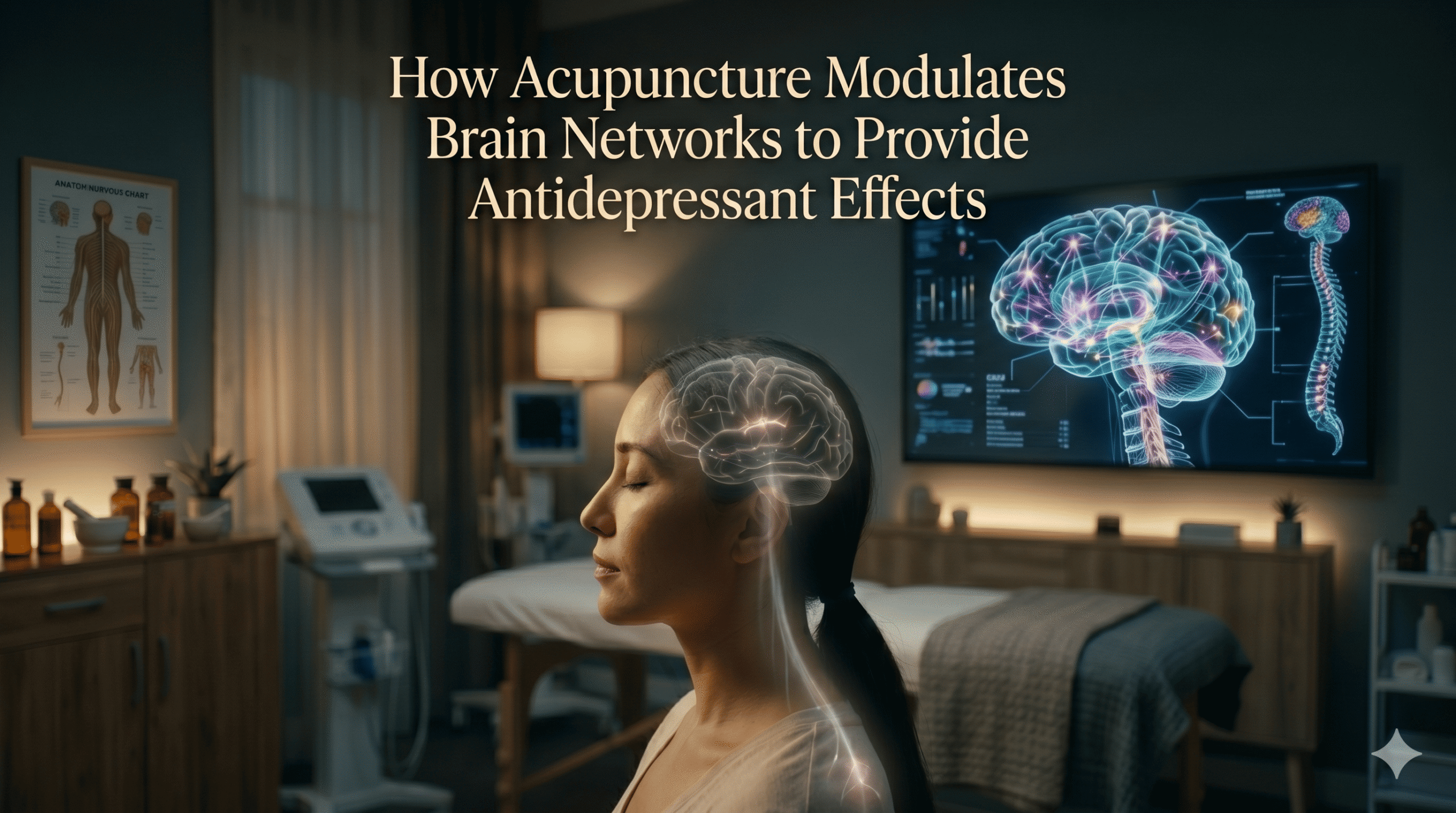
Acupuncture modulates brain networks in patients with major depressive disorder (MDD) through bottom-up neuromodulation, which alters cerebral blood flow (CBF) to balance emotion-related circuits.
This process primarily involves a shift from maladaptive limbic dominance toward enhanced prefrontal engagement, effectively targeting the limbic–cortical networks associated with depression.
The specific ways acupuncture modulates these networks to provide antidepressant effects include: Reduction of Limbic Hyperactivity: Acupuncture helps reduce hyperactivity in the limbic system and emotion-memory circuits.
Research shows a significant decrease in CBF in the amygdala and the posterior cingulate cortex following stimulation.
Enhancement of Somatosensory–Cognitive Networks: During stimulation, patients with MDD exhibit increased CBF in the postcentral and prefrontal regions.
Compared to healthy individuals, patients with MDD show a significantly greater recruitment of these somatosensory–cognitive networks during acupuncture.
Sustained Prefrontal Activation: A key finding is the sustained activation of the middle frontal gyrus (DLPFC) even after the acupuncture session has ended.
The prefrontal cortex is crucial for cognitive control and emotional regulation, and its enhanced engagement suggests a potential mechanism for long-term antidepressant benefits.
By tempering overactive emotion-processing areas (like the amygdala) and boosting underactive regulatory areas (like the DLPFC), acupuncture helps normalize the neural perfusion patterns that are often disrupted in MDD.
鍼治療は、大うつ病性障害(MDD)患者において、情動関連回路のバランスを整えるために脳血流(CBF)を変化させる「ボトムアップ型神経調節」を通じて脳ネットワークを調節します。
このプロセスは主に、不適応な大脳辺縁系優位の状態から前頭前野の関与の強化への移行を伴い、うつ病に関連する辺縁系ー皮質ネットワークを効果的に標的としています。
鍼治療が抗うつ効果をもたらすためにこれらのネットワークを調節する具体的な方法には、以下が含まれます:
辺縁系過活動の抑制:鍼治療は、大脳辺縁系および情動・記憶回路の過活動を抑制するのに役立ちます。
研究では、刺激後に扁桃体および後帯状皮質の脳血流が有意に減少することが示されています。
体性感覚ー認知ネットワークの強化:刺激中、MDD患者は中心後回および前頭前野領域で脳血流の増加を示します。
健常者と比較して、MDD患者は鍼治療中にこれらの体性感覚ー認知ネットワークの動員が有意に大きいことがわかっています。
持続的な前頭前野の活性化:重要な知見は、鍼治療のセッションが終了した後でも、中前頭回(DLPFC)の活性化が持続することです。
前頭前野は認知制御や感情調節に不可欠であり、その関与の強化は長期的な抗うつ効果の潜在的なメカニズムを示唆しています。
扁桃体のような過活動な感情処理領域を抑え、DLPFCのような活動不足な調節領域を高めることにより、鍼治療はMDDでしばしば乱れる神経灌流パターンの正常化を助けます。
Exercise 3
Discussion ディスカッション
Q: What is the primary mechanism through which acupuncture modulates brain networks in MDD patients?
MDD患者において、鍼治療が脳ネットワークを調節する主なメカニズムは何ですか?
Q: Which brain regions show a decrease in cerebral blood flow (CBF) following acupuncture stimulation?
鍼刺激後、どの脳領域で脳血流(CBF)の減少が見られますか?
Q: How does the brain’s response to acupuncture differ between MDD patients and healthy individuals?
鍼治療に対する脳の反応は、MDD患者と健常者でどのように異なりますか?
Q: What happens to the middle frontal gyrus (DLPFC) after an acupuncture session ends?
鍼治療のセッション終了後、中前頭回(DLPFC)はどうなりますか?
Q: What are the two main types of brain areas that acupuncture targets to normalize neural patterns?
神経パターンを正常化するために、鍼治療が標的とする2つの主な脳領域のタイプは何ですか?
Exercise 4
Further Discussion 一歩踏み込んだディスカッション
Q: How might the concept of ‘bottom-up neuromodulation’ be explained to a patient who is skeptical about acupuncture?
鍼治療に懐疑的な患者に対して、「ボトムアップ型神経調節」という概念をどのように説明できるでしょうか?
Q: Considering the sustained activation of the DLPFC, how often do you think acupuncture sessions should be performed for long-term benefits?
DLPFCの活性化が持続することを考慮すると、長期的な効果を得るためには、鍼治療のセッションはどのくらいの頻度で行われるべきだと思いますか?
Q: In your clinical experience, have you noticed physical signs in patients that correlate with the reduction of limbic hyperactivity?
あなたの臨床経験において、辺縁系の過活動の抑制と相関する患者の身体的サインに気づいたことはありますか?
Q: How can physical therapists or acupuncturists use this neurological information to improve their treatment strategies for mental health?
理学療法士や鍼灸師は、メンタルヘルスの治療戦略を改善するために、この神経学的情報をどのように活用できるでしょうか?
Q: What other manual therapies might share similar ‘bottom-up’ effects on the brain networks mentioned in the article?
記事で言及されている脳ネットワークに対して、他にどのような手技療法が同様の「ボトムアップ」効果を共有している可能性がありますか?
Reference
An arterial spin-labeled magnetic resonance imaging study of brain activation in patients with major depressive disorder during acupuncture stimulation: An exploratory study
Yuto Matsuura, Tomokazu Kikuchi, Satoru Yamaguchi, Haruo Yoshimasu, Hiroshi Matsuda, Tomoyuki Okudaira, Fumiko Yasuno, Tomomi Sakai, Kazuhiro Tsuchiya
URL:https://www.sciencedirect.com/science/article/pii/S0925492726000855?via%3Dihub